Tuesday, January 17, 2012

Make Your Space Feel Larger: Use Horizontal Lines

In a previous blog post, "Make Your Space Feel Larger: Use Vertical Lines" (click here to visit), I discussed how vertical lines can be used to create a sense of height in small spaces. However, horizontal lines can be applied to walls or floors to create a similar effect.

Horizontal lines
are great for making a small kitchen, bedroom, living area, or bathroom seem great and wide. Here are a few examples:


Photo Courtesy of Fittedkitchen.org


Photo Courtesy of The Twenty Life
I love how the designer of the bedroom above used a striped tapestry or sheet of fabric to create an illusion of dept. This method is much easier than painting or applying wallpaper.

Photo Courtesy of Rosy Levi

Photo Courtesy of Homedit

Photo Courtesy of Steven Learner

Photo Courtesy of House and Home
Subtlety, subtlety, subtlety! I love it. Horizontal lines don't have to be applied to an entire wall. You can place strips within a chair rail, followed by furniture and accessories like the seating area above.

Photo Courtesy of Better Homes and Gardens

Photo Courtesy of Simply Seleta
If you have a small kitchen space, try using a striped floor pattern to help widen a narrow path.

Photo Courtesy of Megan Rice Yager

Photo Courtesy of Robert Rufino / Architectural Digest
The lines of the carpet create an illusion of dept in the home office above. The desk seems much farther away than it really is.


Get Creative: Use Building Materials

Wood flooring, paneling, or beams/rafters can also be applied to spaces and create horizontal patterns and dept. Here are some examples:


Photo Courtesy of Christi Azevedo
Notice how the horizontal wooden beams help to widen the space above.

Photo Courtesy of Scholtes Appliances

Photo Courtesy of Murray Mitchell

Photo Courtesy of Lundberg Design


Related Posts:

"Make Your Space Feel Larger: Use Vertical Lines"

"Decor With Patterns: Easy Tips
"

"Decor With Patterns Part 2: creating a focal point"

Make Your Space Feel Larger: Use Vertical Lines

Interior Design is all about creating optical illusions and making small spaces seem larger than they appear. Consider using line if you would like to enlarge tiny living area, bedroom, bathroom, or kitchen space without breaking your wallet. Vertical lines are great for visually elongating a room. When applied to wall surfaces, vertical lines can make a small space seem high and vast. Here are a few examples:

Photo Courtesy of Quito Fierro
Notice the subtle vertical lines on the walls of the bedroom above. Though the lines are very thin, they make a great impact in creating a sense of height.

Photo Courtesy of Homedit

Photo Courtesy of Jennifer Stimpson / This Old House
Do you find yourself not wanting to go through the trouble of applying stripes to all of your walls? Never fear, accent walls with vertical lines are also very effective when creating height.


Photo Courtesy of Alessandra Branca


Photo Courtesy of Jamie Creel and Marco Scarani


Photo Courtesy of Kristiina Ratia

Photo Courtesy of Shelia Bridges

Photo Courtesy of Gaser Tabakoglu


Get Creative: Use Building Materials
Go beyond using wallpaper or paint to create a sense of height in a space. Building materials such as wood or corrugated metal can also be applied to walls to create vertical lines and sense of height. Here are some examples:

Photo Courtesy of John "Johnny" Douglas Tucker


Photo Courtesy of John "Johnny" Douglas Tucker

Photo Courtesy of Lundberg Design


Tuesday, December 13, 2011

When no other hue will do, here's what to do...

Friends of mine have told how lost they become when choosing color schemes for their spaces. Some often become frustrated or quite and use no color at all . If this sounds like you, never fear, the Design Garage is here! Creating color schemes can be a fun experience. Here is an easy tip: pull colors from photographs or works of art. Choose photos that connect with you or your family. Select colors from photos of happy memories or hobbies. Here are great examples:


These photos are of great memories of mine. The first shows me eating scorpion for the first time while in China. The colors that I pulled from the photograph could be used for my kitchen space or dining area! In the second photo I am with a former professor and classmates at the end of a final design critique. These colors could be used to decorate a work space or reading area.

Here are more examples:

If you love to use neutral colors, don't settle for common shades of brown and beige. Use photographs of nature to gather numerous hues for a color scheme. You will generate very creative results.


Family photos can be used too!

You can even use colors from a child's painting. If you have children, the colors could be used to decorate the child's bedroom. Check out the great example below!


Here's how to try!!!
If you have favorite family photos or art pieces that you would like to use for creating color schemes, use an online Color Palette Generator (click here to visit).

1. Save a picture as a jpeg
2. Visit the website and click "browse"
3. Selected your saved photo (file)
4. Click "Create Color Scheme."


When seeing your photo color scheme, each color will have a pantone number next to it(ex: #1A5445). You can visit a local paint store, give a representative your chosen pantone numbers, and they will create cans of paint by using those exact colors.


End Note:

Try creating a color scheme for yourself and tell me about it! If you would like to share your photo color scheme with the Design Garage, send an email to cocreateinteriors@gmail.com. Include your favorite photo with the chosen pantone numbers. The photo and color scheme will be posted on the blog to give other viewers great ideas!


Related Posts:
"Can't find a color scheme? Use your favorite outfit!"
(click here)


Monday, December 5, 2011

Co-Create DIY: Spruce Up Picture Frames


Materials Used:

1. A razor blade
2. KILZ Spray Primer
3. Modern Masters water based paint
(from the metallic paint collection)
4. A sponge paint brush
5. MINWAX Wood Finish
6. A cloth
7. rubber gloves

Tuesday, November 29, 2011

Discover Your Aesthetic: easy tips

In a previous blog post, "Design Reflections: Whoopi Goldberg's NYC Apartment" (click here to visit), I discussed the importance of a space reflecting one's character and design aesthetic. However, how do you find out what your design aesthetic is? How do you express your interests visually so they can be used as design inspiration? Well, making a collage is a great place to start. They are very informative and fun to make! You can make collage of your favorite furniture, materials, places of travel, or interests. Here are a few examples:


Furniture Collage
Photo courtesy of Eheart Designers

Photo courtesy of Liberty Post


Materials Collage
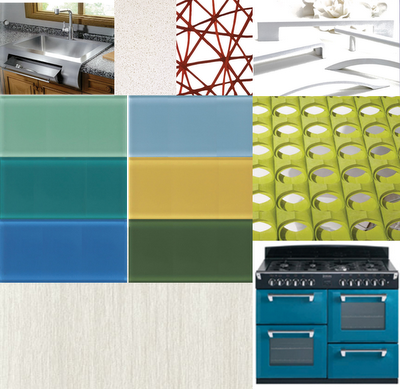
Here is a materials collage from my sketchbook.


Photo courtesy of Eheart Designers

Photo courtesy of Re+Habit

Photo courtesy of Avowed Virago


Travel Collage

Photo courtesy of The Taverna

Photo courtesy of The Stampers Chef

Photo courtesy of Leah Piken Kolidas


Personality / Interest Collage

Photo courtesy of Ninainvorm


Photo courtesy of Polyvore


Wordle Collage
You can make a list of words that come to your mind and place them in Wordle to make a collage such as these (click here to try):


Related Post:
"Design Reflections: Whoopi Goldberg's NYC Apartment"

Tuesday, November 15, 2011

Design History 101: chairs then and now

When I go to furniture stores with my friends I often tell them that much of the furniture they see are only replicas of pieces made over 30-50 years ago. They often laugh at me, but I'm about to prove it! If you think that all today's furniture is new...think again. Just take a look at these chairs. You may have seen many of them in local stores, television, and ads.

Then
Armchair 406 by Alvar Alto, 1939


Now
Poang Chair sold at IKEA, 2011


Then
Pony Chair by Eero Aaino, 1973 (one of my favorites)


Now
Photo courtesy of Interior Design Magazine, 2011


Then
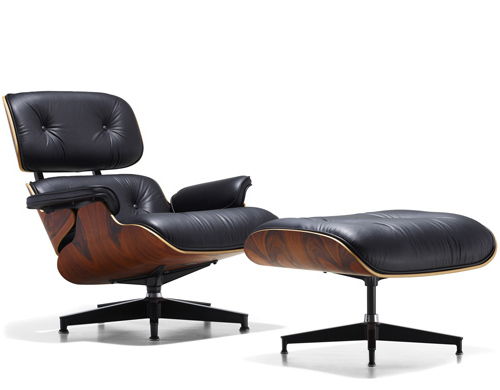
Eames Lounge Chair and Ottoman by Charles and Ray Eames, 1956


Now
The Eames Lounge Chair is featured on the set of House,...

...Cougar Town,...

...and Frasier.
(As you can see, the Eames Lounge chair is quite popular!)


Then

Series 7 Side Chair by Arne Jacobson, 1955

Now
"Trendy Design Chair" sold at Target, 2011


Then
Nelson Swag Leg Chair by George Nelson, 1958


Now

"Acrylic Rumor Chair" sold at Target, 2011


Then

Swan Chair by Arne Jacobson, 1958


Now
"Acrylic Dining Chair" sold at Target, 2011


Then

Bertoia Diamond Chair by Harry Bertoia, 1952


Now
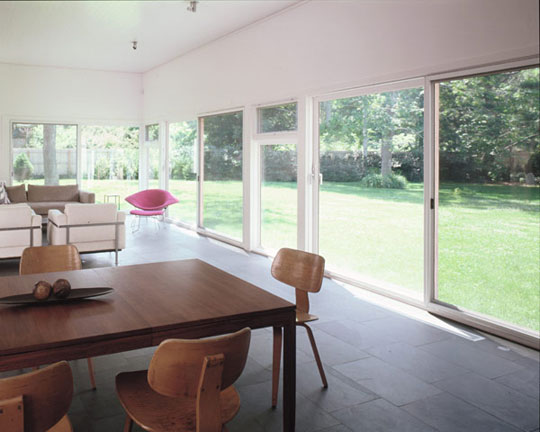
The Bertoia Diamond Chair featured in the Darby Lane House by Deborah Berke & Partners Architects LLC.


Then
Eames Molded Dining Chair by Charles & Ray Eames, 1946

Now
The Eames Molded Dining Chairs featured in the Darby Lane House by Deborah Berke & Partners Architects LLC.


Then
Louis Ghost (aka Ghost Chair) by Philippe Starck, 2002 (also one of my favorites)


Now
"Gamma Arm Chair" sold at Target, 2011
(Now, the Ghost Chair was not made 50 years ago, but it's one of my favorite chairs. I couldn't resist.)


End Note:
Writing this post was a lot of fun. I hope that it helped you to understand that furniture made over 50 years ago is still popular now. In supermarkets today, replicas of famous furniture is seen everywhere and is unrecognized by many.

Don't get me wrong, I am not against buying replicas. The reason that stores such as IKEA exist is to make famous furniture pieces available to the average consumer. If you have a love for modern furniture, but you have a tight budget, check out places such as IKEA, Target, local thrift stores, Craigslist, or Facebook. I am positive that you will find something great!